
Patient Resources
Understanding Dry Eye Disease
Your Journey to a Fulfilling Life
Patient Resources
Latest Insights
Understanding Dry Eye Syndrome
What You Need to Know
Dry eye syndrome is more than just an occasional annoyance—it’s a chronic condition that affects your comfort, mood, and quality of life. From irritation to fluctuating vision, dry eyes can make daily activities like reading, working, or even enjoying time outdoors difficult. But with the right knowledge and care, relief is possible.
Dry eye occurs when there’s a lack of proper lubrication or moisture on the surface of your eyes. This can result from various factors, including:
- Reduced tear production due to aging or certain medical conditions.
- Increased tear evaporation caused by dry environments or screen time.
- Imbalances in the makeup of your tears, leading to poor hydration of the eye’s surface.

Risk Factors Can Include:
- >40 years of age (although it is increasingly affecting children and young adults)
- Digital device use
- Unbalanced pro-inflammatory diet (lack of omega 3s)
- Systemic conditions (e.g. diabetes, rosacea, arthritis, thyroid disease)
- Medications (e.g. antihistamines, anti-depressants, diuretics, beta blockers, chemotherapy)
- >40 years of age (although it is increasingly affecting children and young adults)
- Digital device use
- Unbalanced pro-inflammatory diet (lack of omega 3s)
- Systemic conditions (e.g. diabetes, rosacea, arthritis, thyroid disease)
- Medications (e.g. antihistamines, anti-depressants, diuretics, beta blockers, chemotherapy)
- Female
- Contact lens use
- Use of eye makeup
- Allergic sensitivities
- Dry and dusty environments
- History of eye surgeries (e.g. cataract, LASIK)
- Inadequate water consumption
- Female
- Contact lens use
- Use of eye makeup
- Allergic sensitivities
- Dry and dusty environments
- History of eye surgeries (e.g. cataract, LASIK)
- Inadequate water consumption
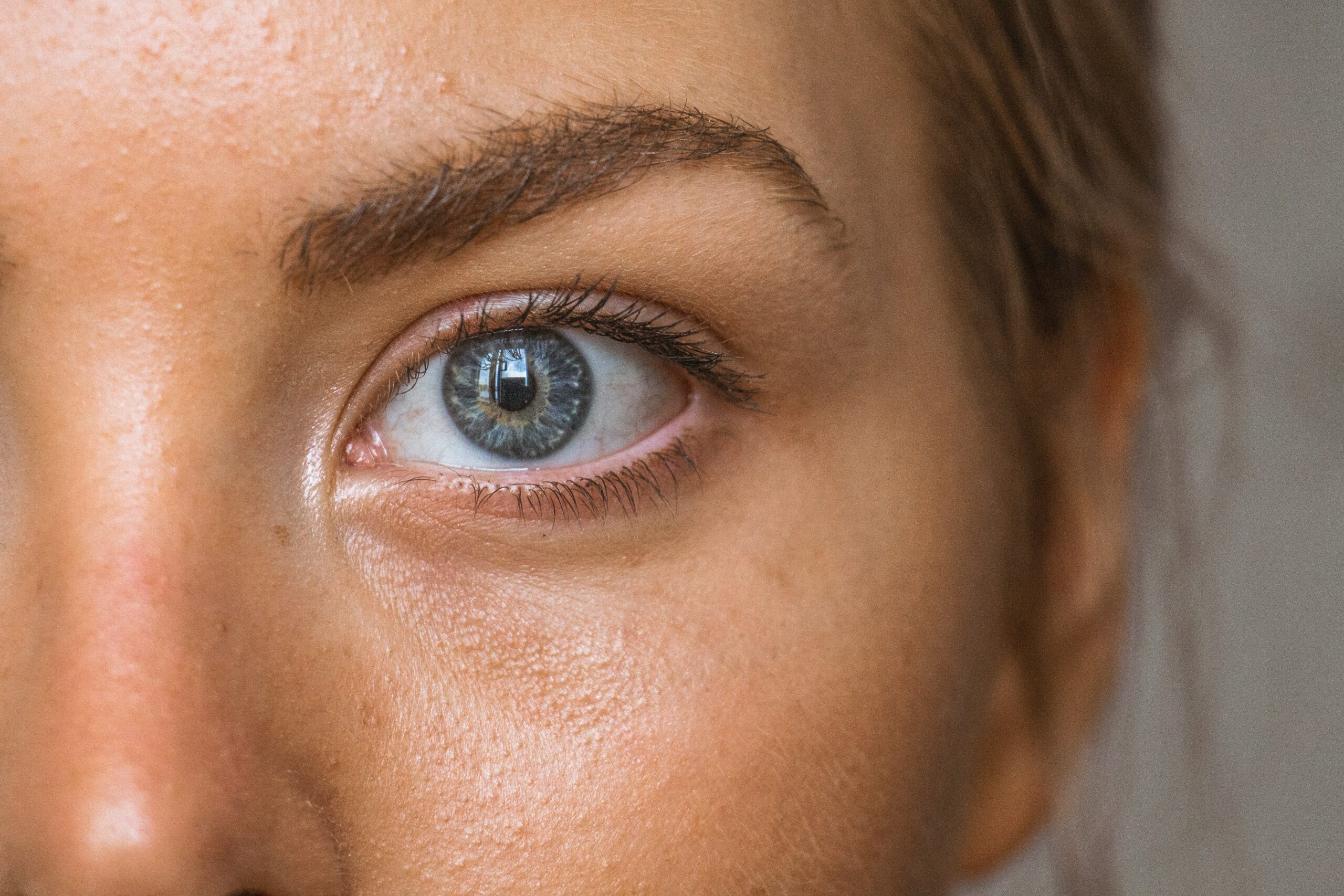
Interestingly, many with dry eye disease will complain of watery eyes. This is because the eyes reflexively water when bothered by the irritation. This attempts to compensate for how dry the eyes are. However, tears are mostly made of water – alone, they cannot properly coat the eye and fix dry eye.
A proper tear film that coats the eye is made of 3 layers: water, oil (lipid), and mucous. Water comes from tears produced in our lacrimal gland. The oil comes from our meibomian glands within our eyelids. Mucous comes from cells in the outermost layer of our eye, the conjunctiva.
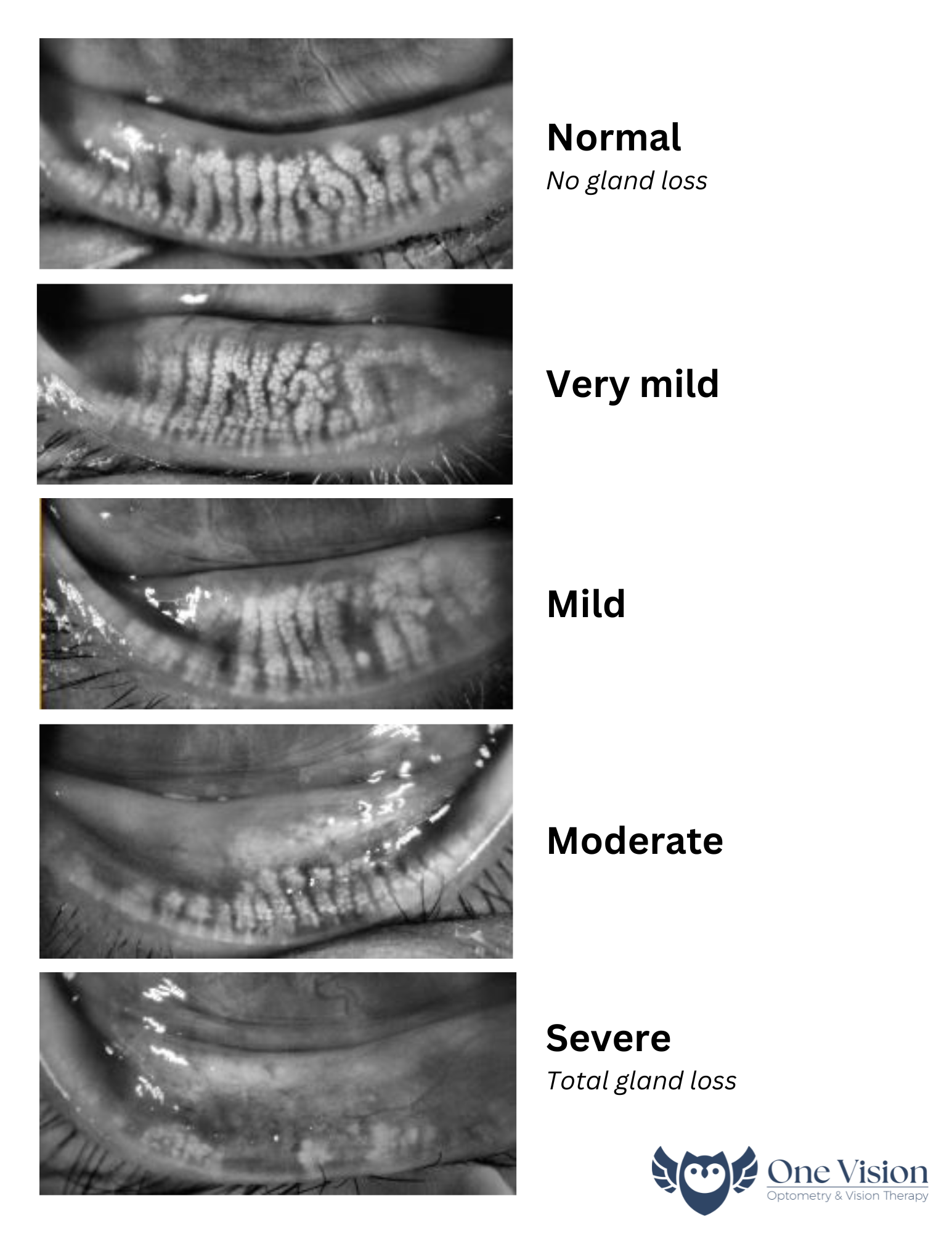
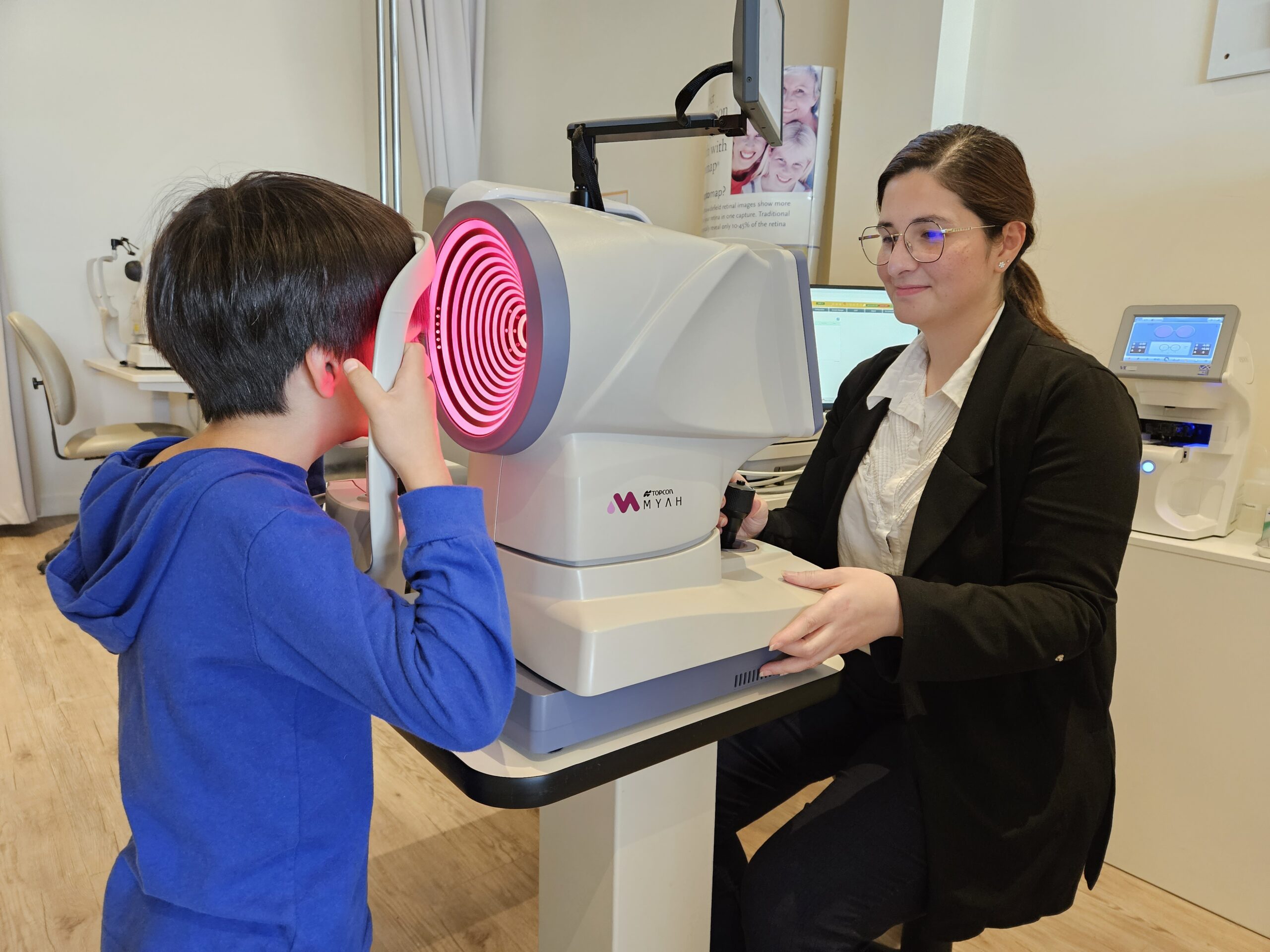
In most cases, it is our meibomian glands that are not functioning properly or disappearing. Without proper oil in our tears, our eyes dry up quickly. The optometrist can use a special scan called meibography to see how well your glands are working, and customize a treatment plan for you.

Did you know?
- A watery eye is a common sign of dry eye: Your body may overproduce tears to compensate for dryness.
- Not all drops are the same! If you are using over-the-counter eye drops, please let your doctor know. Some are not meant to be used long-term or more than 4 times a day. Some also have more chemical preservatives that can irritate the eye in the long run.
- 20% of people experience varying degrees of dry eye, with females over 40 being at the highest risk.
- Dry eye is becoming more and more common in children due to screens.
- Sometimes you can have dry eyes without having any symptoms. It is important to treat it early to prevent worsening dry eye in the future.
- Although there is no cure for dry eye, there are many ways to manage it so that it interferes less with your day-to-day activities.
Compared to other ocular conditions including macular degeneration, glaucoma, and retinal detachment, dry eye disease shows similar or higher risks for compromised quality of life.
Dry eye disease has a 1.54x risk of low physical health scores and a 1.39x risk of low mental health scores.
How to Manage and Relieve Dry Eyes
The good news? There are practical steps you can take to reduce symptoms and protect your eyes:

Reduce Screen Time
Remember to blink regularly while using digital devices to maintain moisture on your eyes.

Avoid Dry Environments
Use a humidifier to add moisture to the air, especially during colder months or in air-conditioned spaces.

Minimize the use of eye cosmetics
Remove makeup thoroughly every day, and practice proper lid hygiene.

Limit Contact Lens Wear
Reduce how long you wear your contact lenses, as they can exacerbate dryness.

Focus on Your Health
Manage underlying conditions like diabetes or arthritis that can contribute to dry eye symptoms.

Kick the Smoking Habit
Smoking damages your tear glands and worsens dry eye symptoms.

Supplement Your Diet
Omega-3 fatty acids, found in fish or supplements, can support healthy tear production.

Use Prescribed Treatments
Use recommended eye drops, hot compresses, and treatments tailored to your needs by an eye care professional.
Comprehensive Dry Eye Treatment
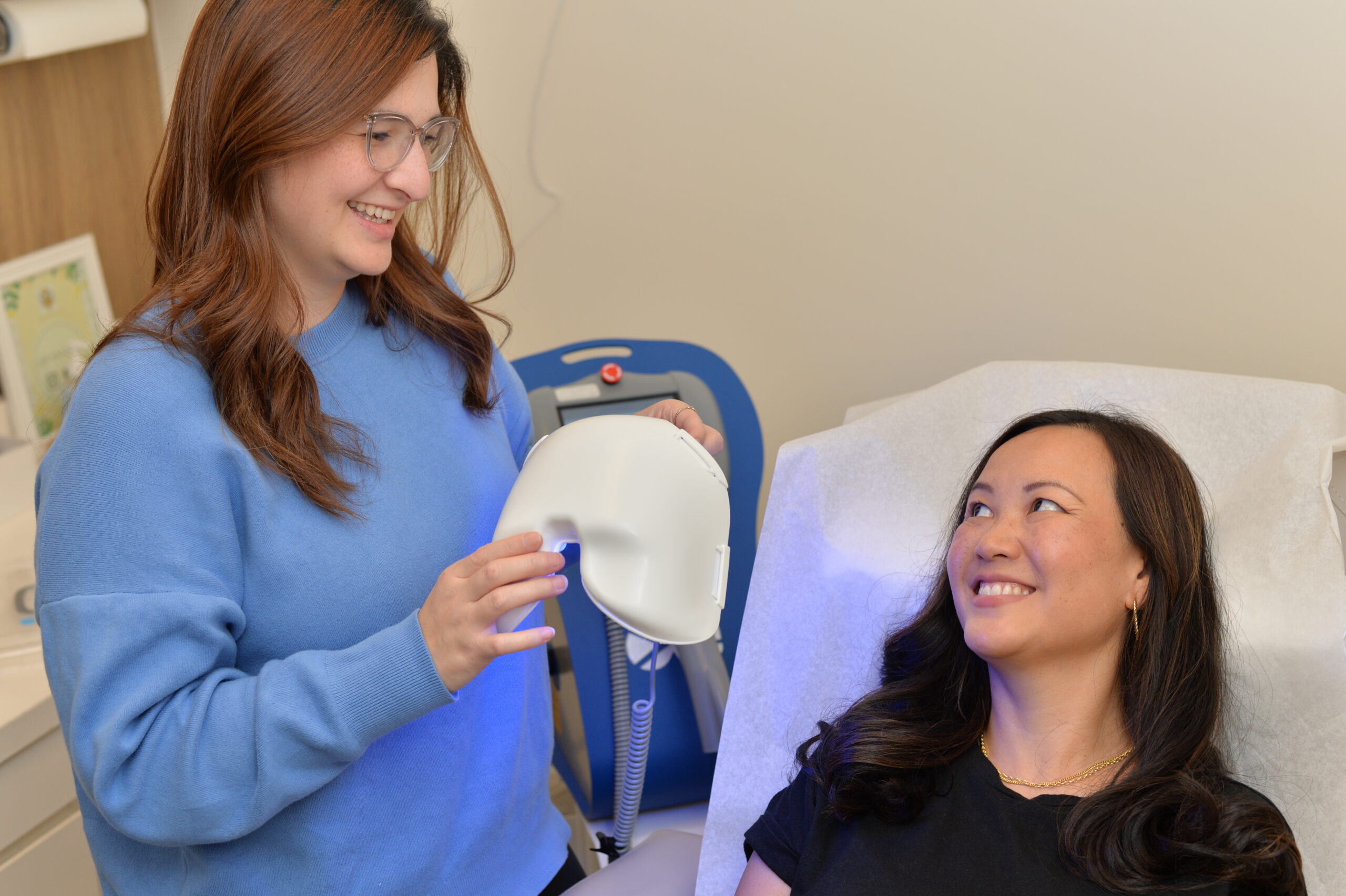
Our Dry Eye Spa offers advanced, in-office treatments to alleviate symptoms and protect your eye health.
Common Symptoms: Burning, stinging, watery eyes, blurry vision, contact lens discomfort, and worse dryness on digital devices.
Treatment Highlights:
- Light Therapy (IPL & LLLT): Opens oil glands for better lubrication.
- Lid & Lash Cleaning: Removes debris and bacteria, similar to a dental cleaning.
- At-Home Care Plan: Maintain progress with personalized lid hygiene routines.
Protect your vision and enjoy lasting relief. Contact us today to schedule your appointment!